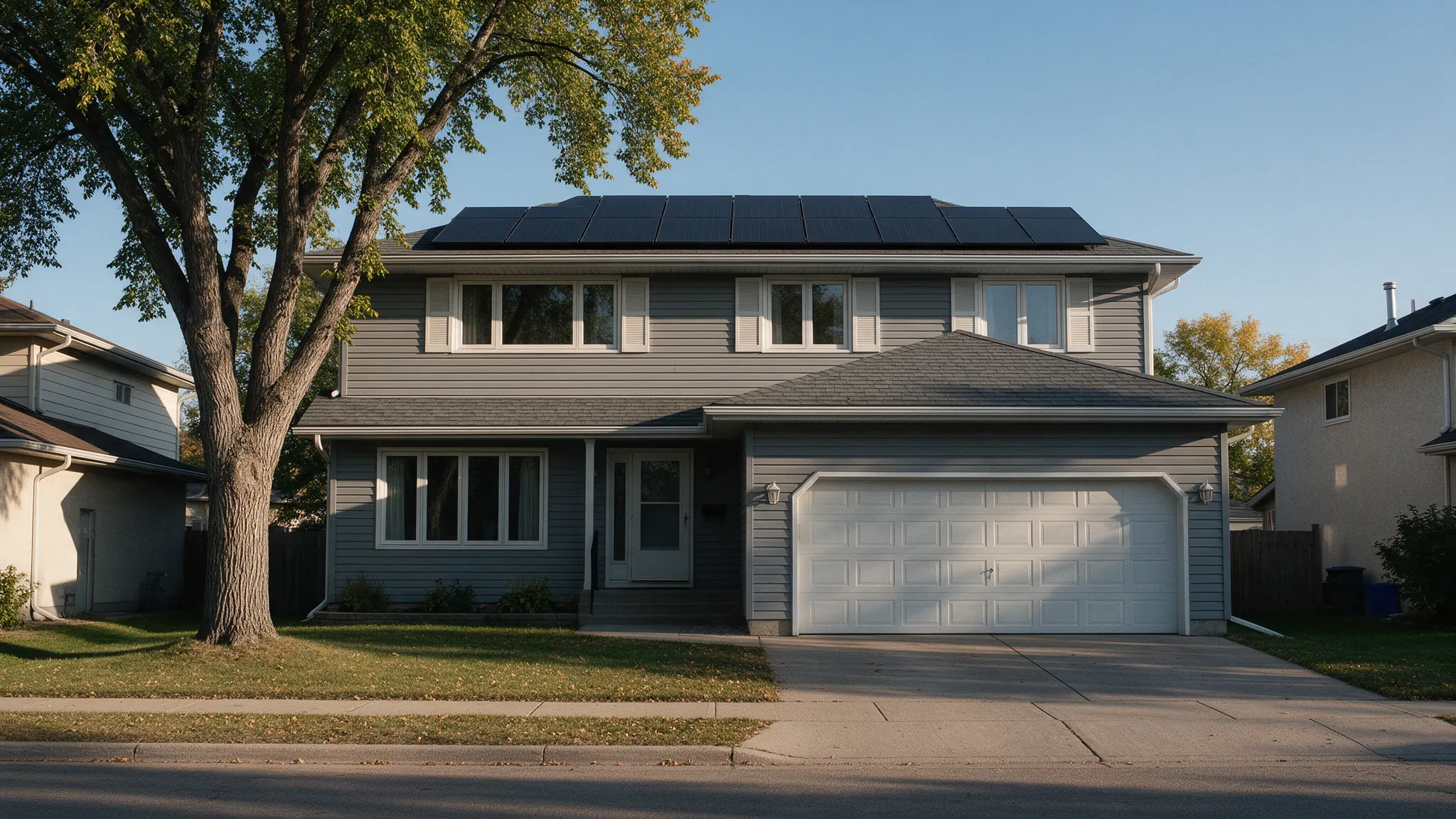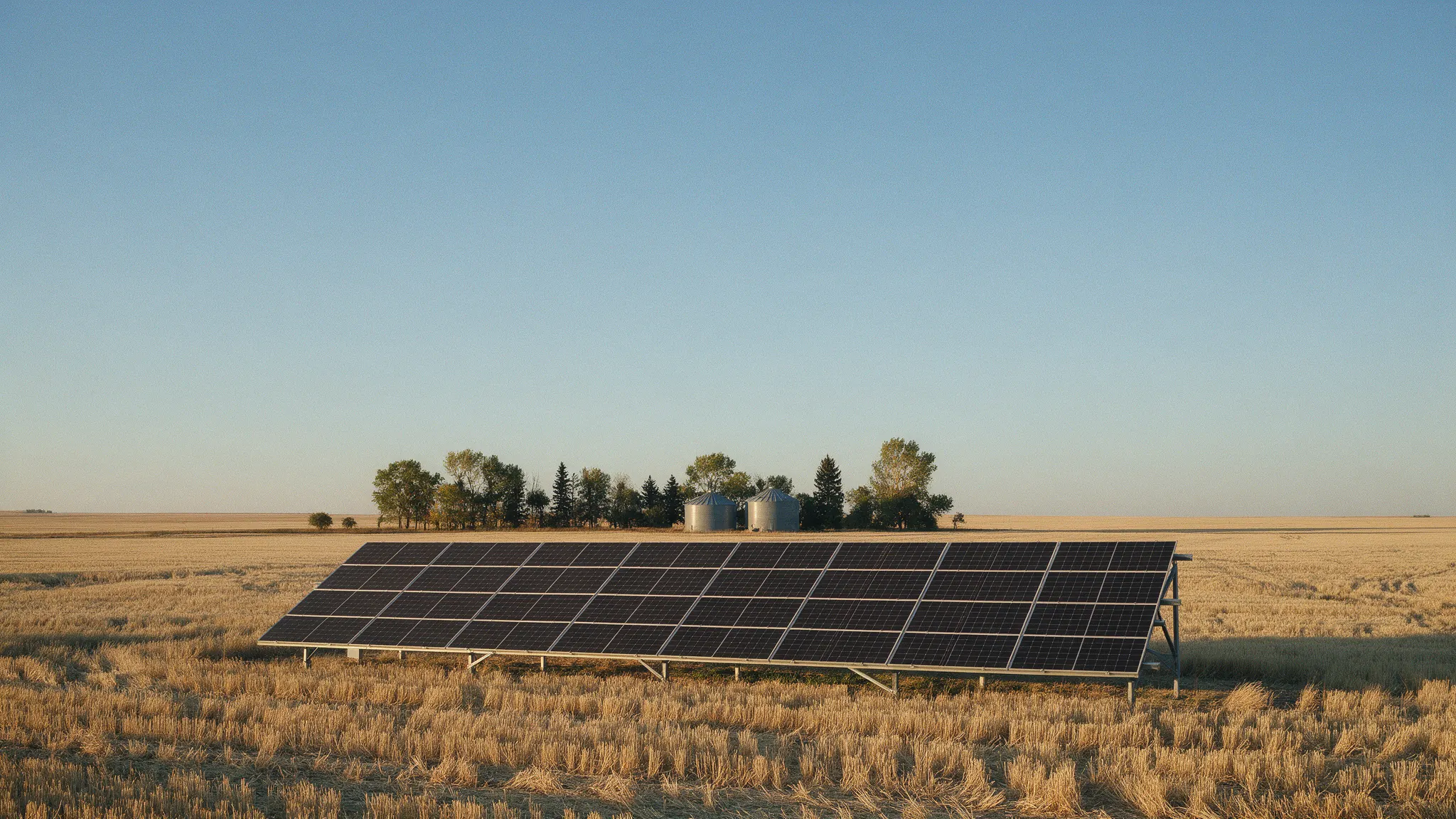
The most common question we hear is whether solar is worth it in a place with Manitoba’s winters. The short answer is yes, but the reason has more to do with the whole year than with January.
Cold is good for panels
Solar panels convert light, not heat, into electricity. They actually run more efficiently when they’re cold, which is why a bright, clear winter day can produce well for the hours the sun is up.
Short days are the real limit
What holds winter production back is daylight. In December and January the sun is low and the days are short, so a system makes a fraction of what it makes in June. That’s normal, and it’s why we never size a system around winter output.
Instead we design for production over the full year. Long, clear days from spring to early fall do most of the work.
What about snow?
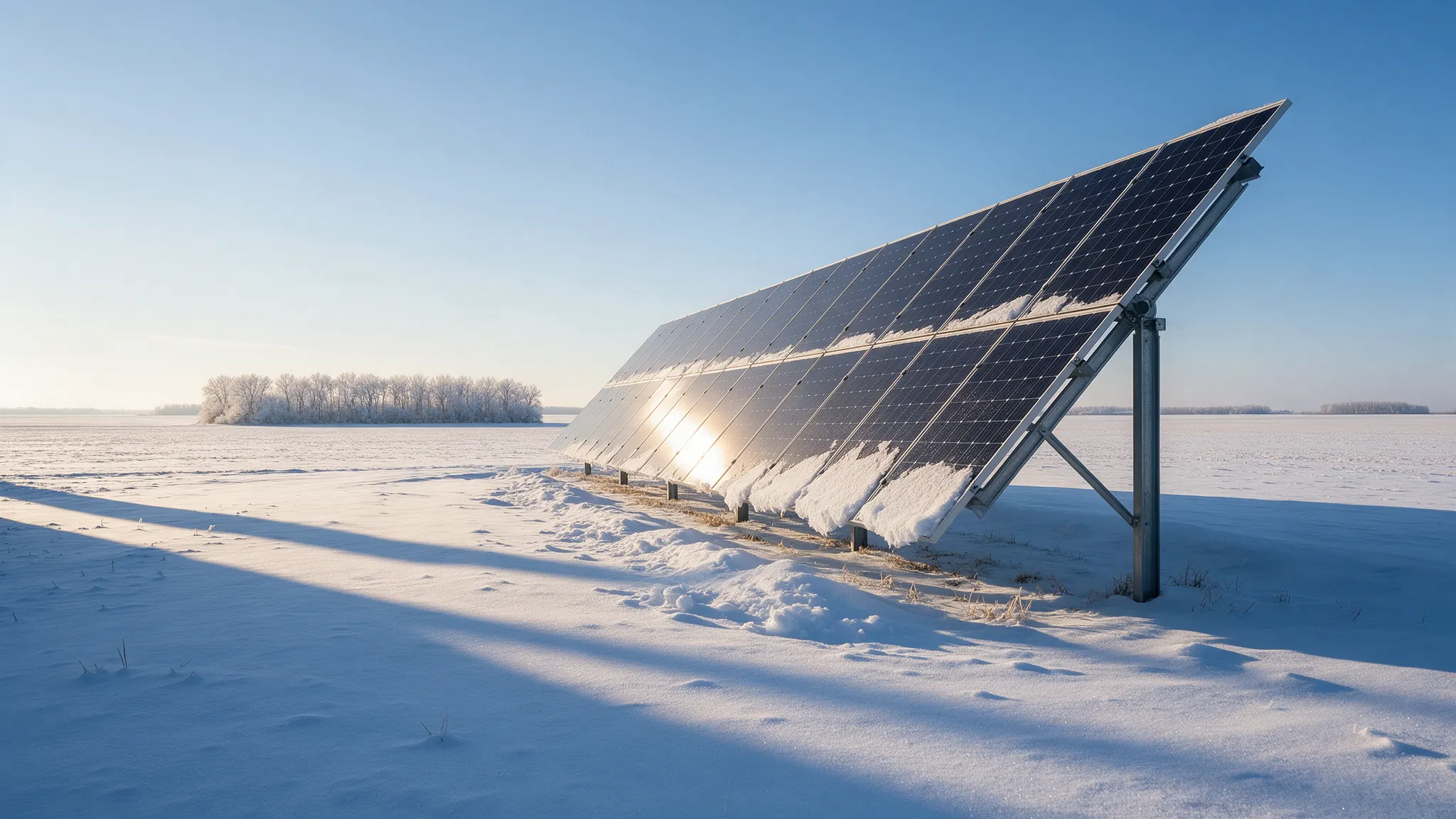
Snow on the panels stops production until it clears. In practice, dark panels warm in the sun and snow slides off, especially when they’re tilted steeply. Ground mounts are easy to set at a steeper angle and to reach if you want to brush them off. On a roof, it’s usually best to let the sun do the work rather than climb up.
How the winter gap is covered
- Grid-tied systems draw from Manitoba Hydro when production is low. Nothing goes dark.
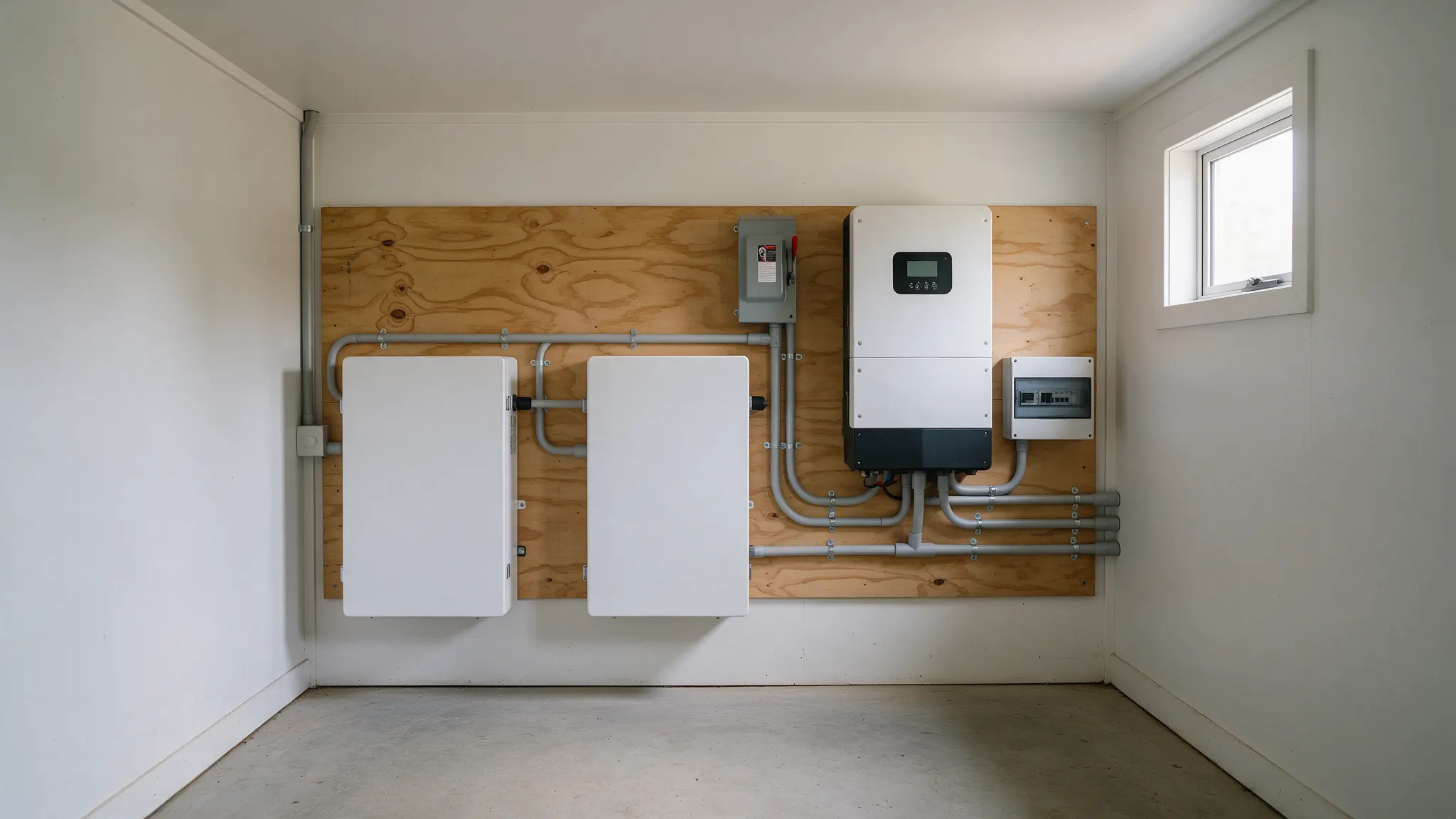
- Battery systems store power for evenings and outages, and draw from the grid when the battery runs low.
- Off-grid systems need a generator for long cloudy stretches, and a battery bank kept warm enough to hold its capacity.
The bottom line
Winter doesn’t make solar unworkable here. It makes good design more important: the right tilt, the right size for your annual use, and, off-grid, enough storage and backup to get through the darkest weeks.