Every solar system turns sunlight into electricity. What differs is what happens to that electricity, and what happens when the grid goes down.
Grid-tied
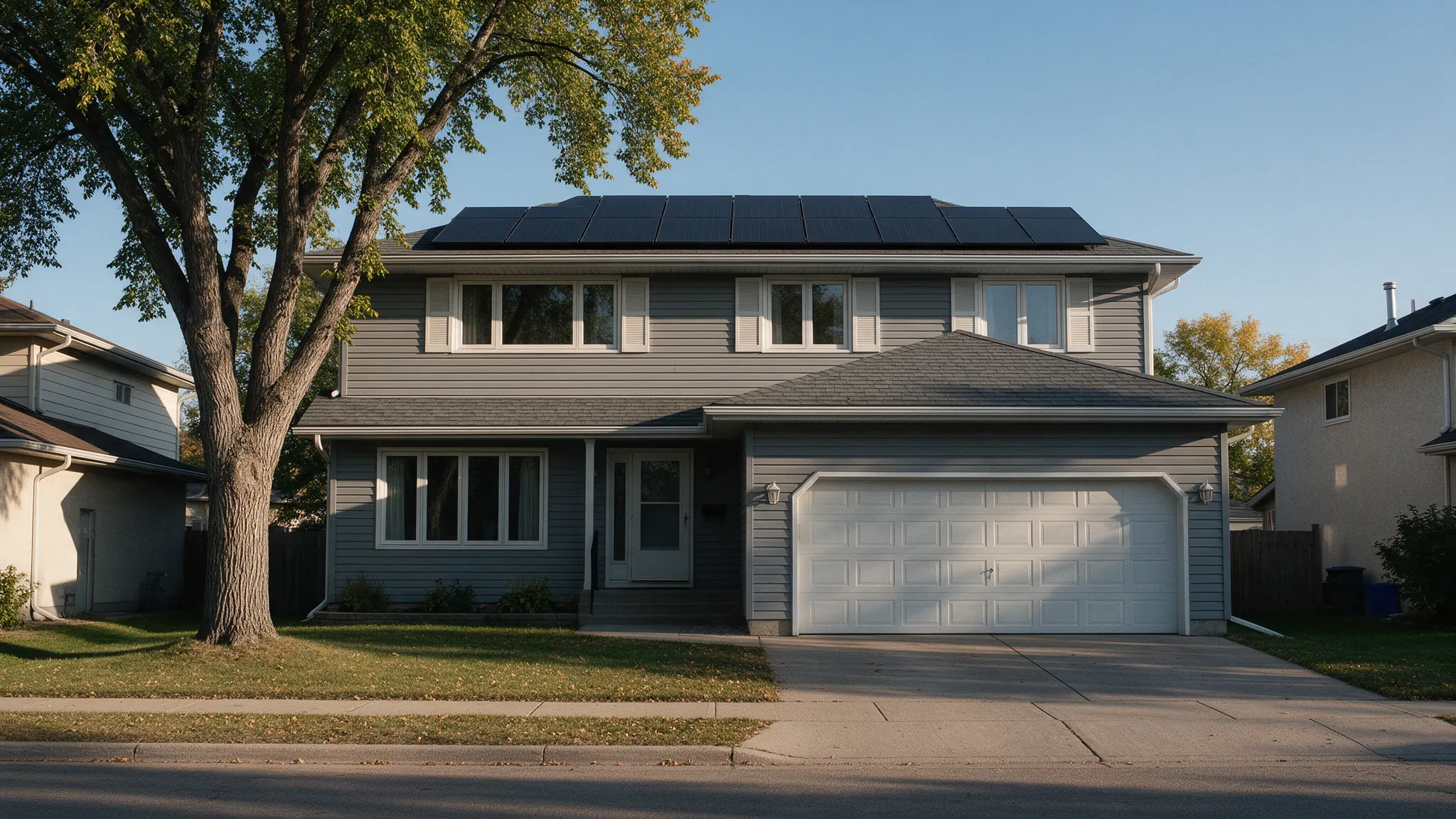
A grid-tied system connects to Manitoba Hydro through a bidirectional meter. Your home uses solar first, surplus goes to the grid for a credit, and the grid covers the rest.
In an outage: a standard grid-tied system shuts down for safety, so it doesn’t provide backup.
Suits: most homes and businesses connected to the grid that want to offset part of their power use at the lowest cost.
Hybrid
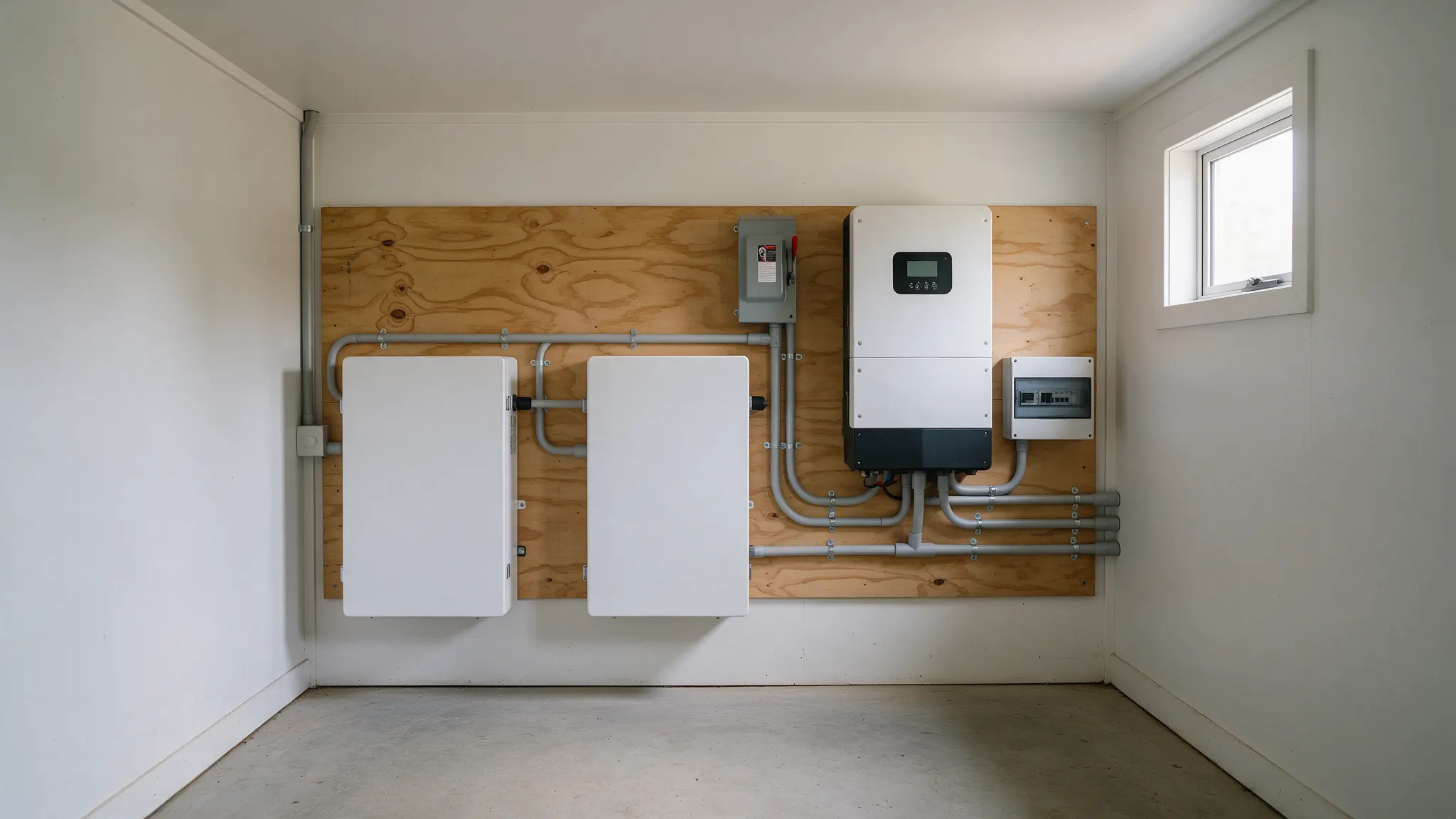
A hybrid system is grid-tied with batteries added, usually through a hybrid inverter. It stores your own surplus to use later and keeps chosen circuits running when the grid fails.
In an outage: backed-up circuits keep running from the battery, and from the panels in daylight.
Suits: rural properties with outages, households that need power for a well pump or medical equipment, and anyone who values backup.
Off-grid
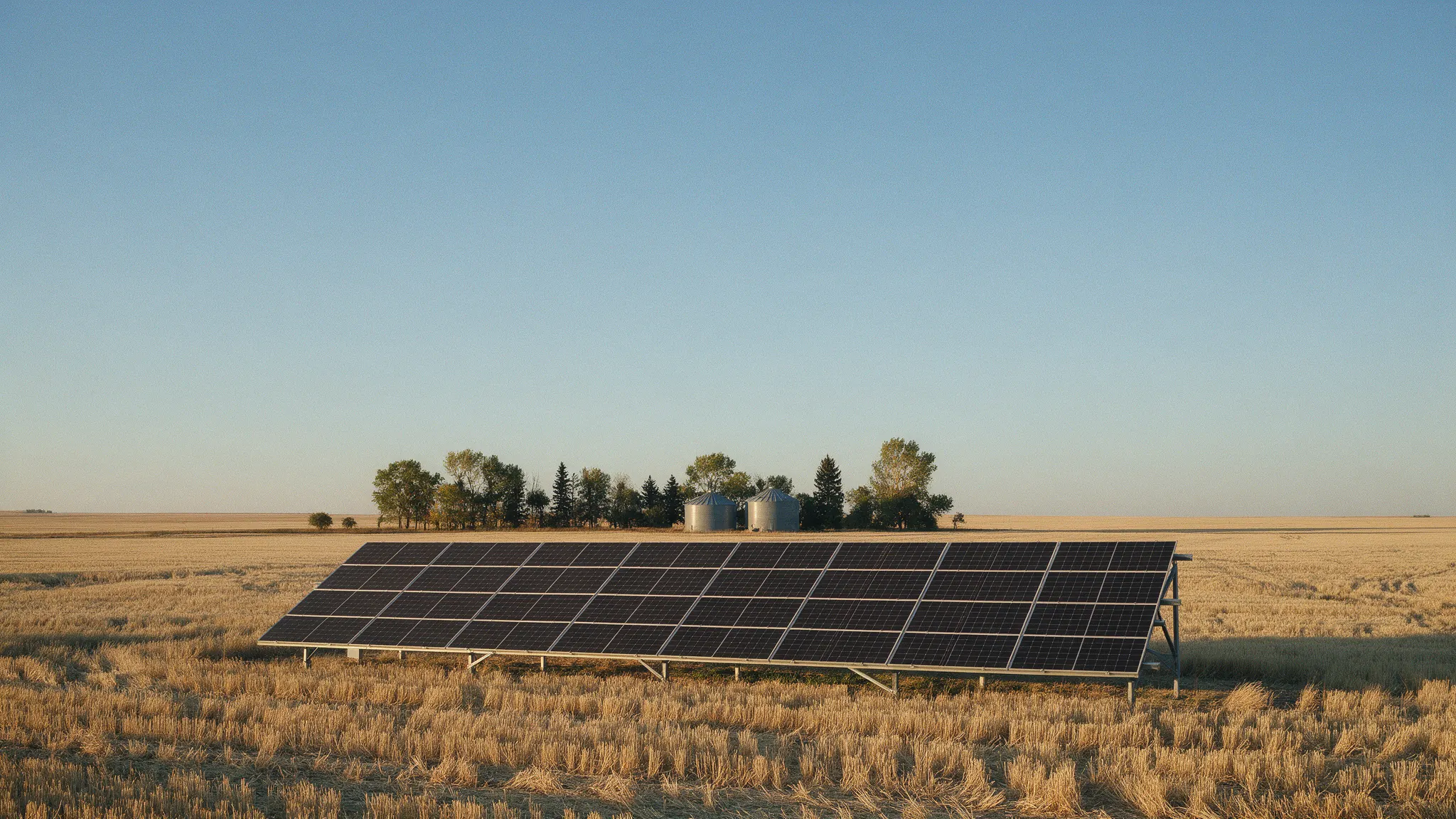
An off-grid system has no utility connection at all. Panels, a battery bank and usually a generator supply everything.
In an outage: there is no outage to speak of. The system is the supply, so it must be designed to cover every load in every season.
Suits: cottages, cabins and remote sites where running a line costs too much or isn’t possible.
A quick comparison
| Type | Grid connection | Backup in an outage | Relative cost |
|---|---|---|---|
| Grid-tied | Yes | No | Lowest |
| Hybrid | Yes | Yes, chosen circuits | Higher |
| Off-grid | No | The system is the supply | Highest per kWh used |
Not sure which fits? Tell us about the property and what you want from solar, and we’ll recommend one, or tell you if solar isn’t the right call.