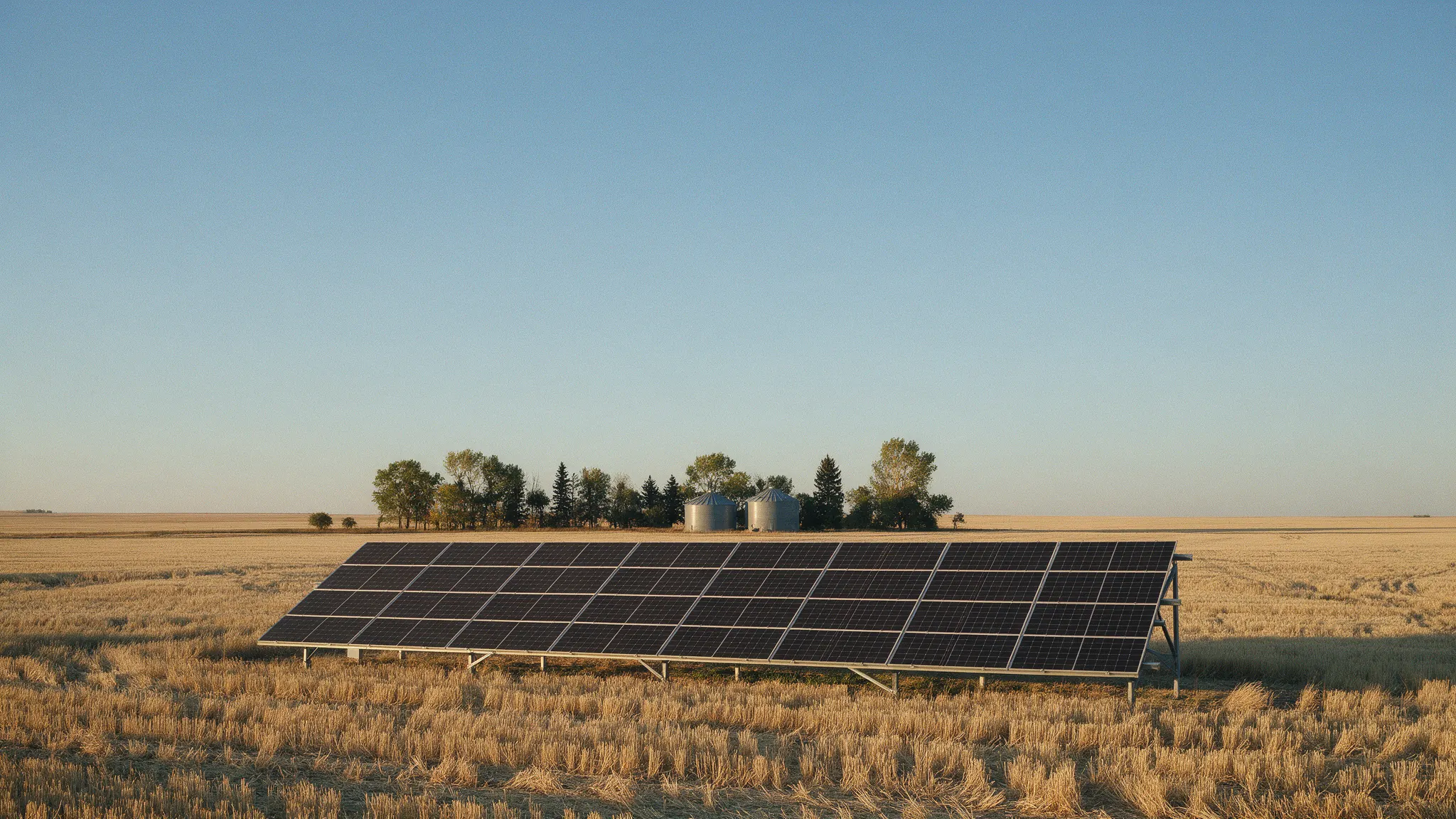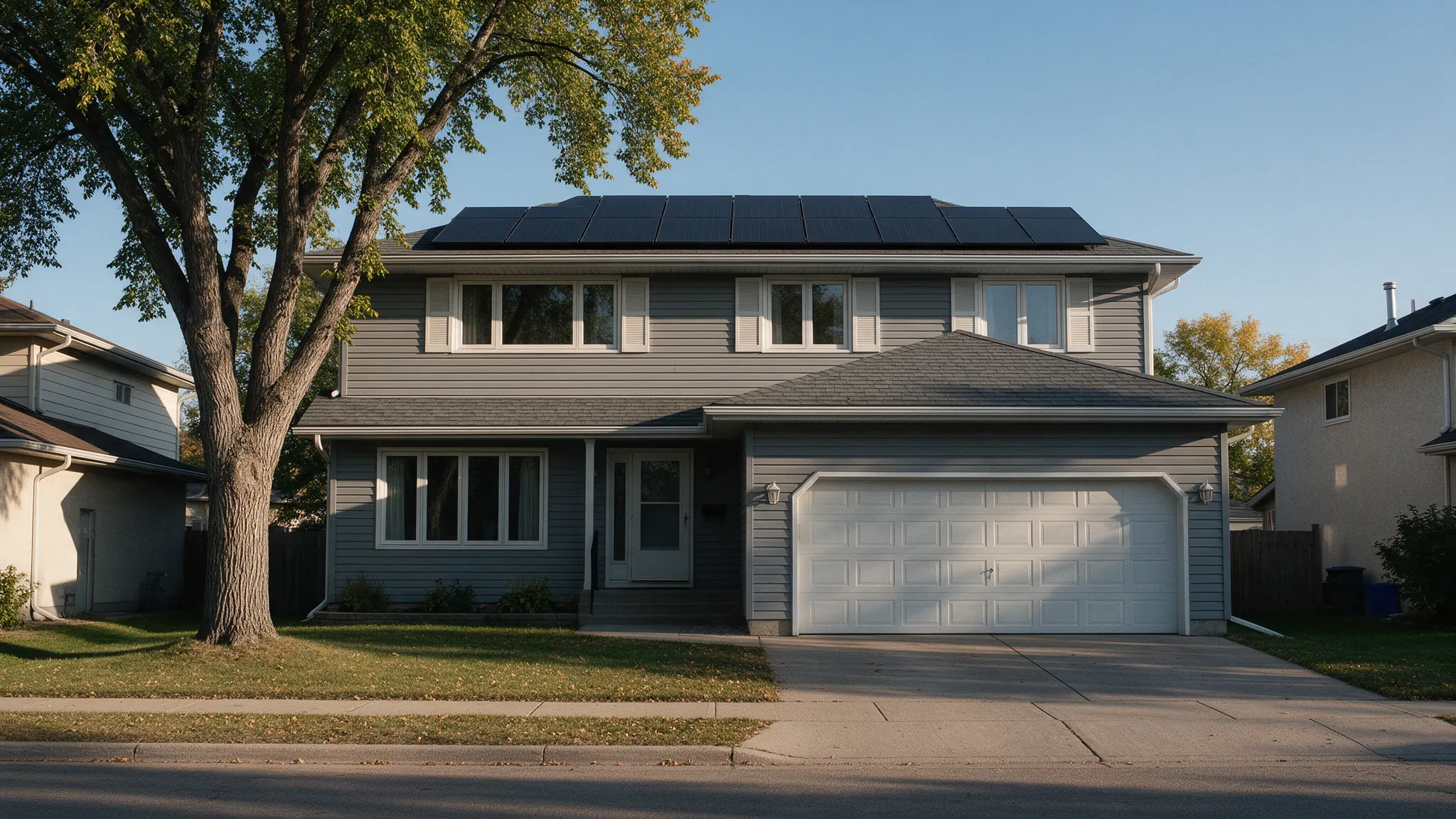
If you connect a solar system to Manitoba Hydro’s grid, you’ll do it under a net billing arrangement. Understanding it is the single most useful thing you can do before deciding how big a system to buy.
How it works
A grid-tied system needs a bidirectional meter from the utility. When your panels produce more than your home is using, the surplus flows out to the grid and the meter records it. When you’re using more than you produce, at night or on a cloudy day, you draw from the grid as usual.
The catch: exports earn less
Under net billing, the power you export is credited at a lower rate than the rate you pay for power you buy. So a kilowatt-hour you make and use yourself is worth more than one you send to Hydro.
What it means for system size
Because exports earn less, the best-value system is usually one sized to cover what you use, not the biggest array your roof can hold. That’s why we start every design with 12 months of your Hydro bills.
- Daytime use helps. Shops, home offices and farm loads that run while the sun is up use more of the solar directly.
- Batteries can shift surplus. Storing afternoon production for the evening means using it yourself instead of exporting it. Whether that pays depends on the battery’s cost, so we model it honestly.
- Bigger isn’t always better. Extra panels that mostly export add cost faster than they add value.
Is solar still worth it?
With Manitoba’s low electricity rates and net billing, payback takes longer than in most provinces. Solar still makes sense for many properties, especially those with daytime loads, a need for backup power, or no grid connection at all. We’ll show you the numbers for your site, including when they don’t work.