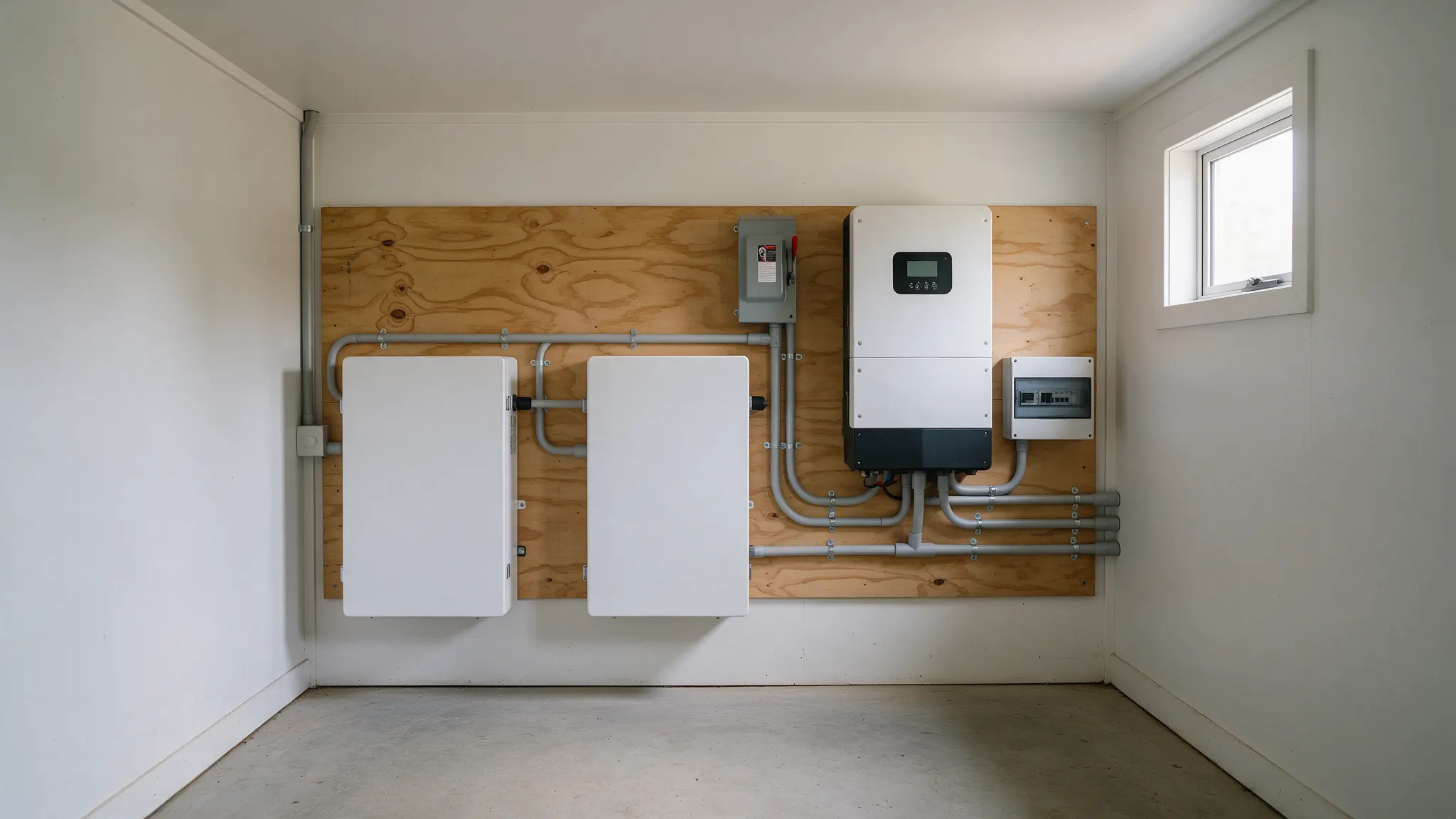
Battery technology has improved a lot in recent years. For most solar systems, the choice comes down to three types, each with its own trade-offs.
Lithium
Lithium batteries cost the most up front, but they last the longest and need no maintenance. They’re also more efficient through charge and discharge cycles, so more of the power you store comes back out.
Best for: homes and hybrid systems that cycle the battery every day.
AGM
AGM (absorbent glass mat) batteries are a mid-cost option and are also maintenance-free. Their lifespan is shorter than lithium.
Best for: backup-only systems that sit charged most of the time, and moderate budgets.
Flooded lead-acid
Flooded batteries are the most affordable and can last a long time, but only with regular maintenance: topping up with distilled water and checking electrolyte levels.
Best for: off-grid owners who are comfortable with upkeep and want the lowest cost per kilowatt-hour of storage.
Why temperature matters here
Cold reduces a battery’s capacity and can shorten its life. In Manitoba, where a battery lives matters as much as which type it is. A heated utility room or an insulated, conditioned enclosure keeps the bank within its working range through winter.
How to decide
- How often will it cycle? Daily cycling favours lithium.
- Will you maintain it? If not, rule out flooded.
- Where will it live? A cold shed or cabin needs a plan for temperature.
- What’s the budget? Compare cost over the battery’s life, not just the purchase price.